
NIST Guidelines Consulting
About The Service
Overview
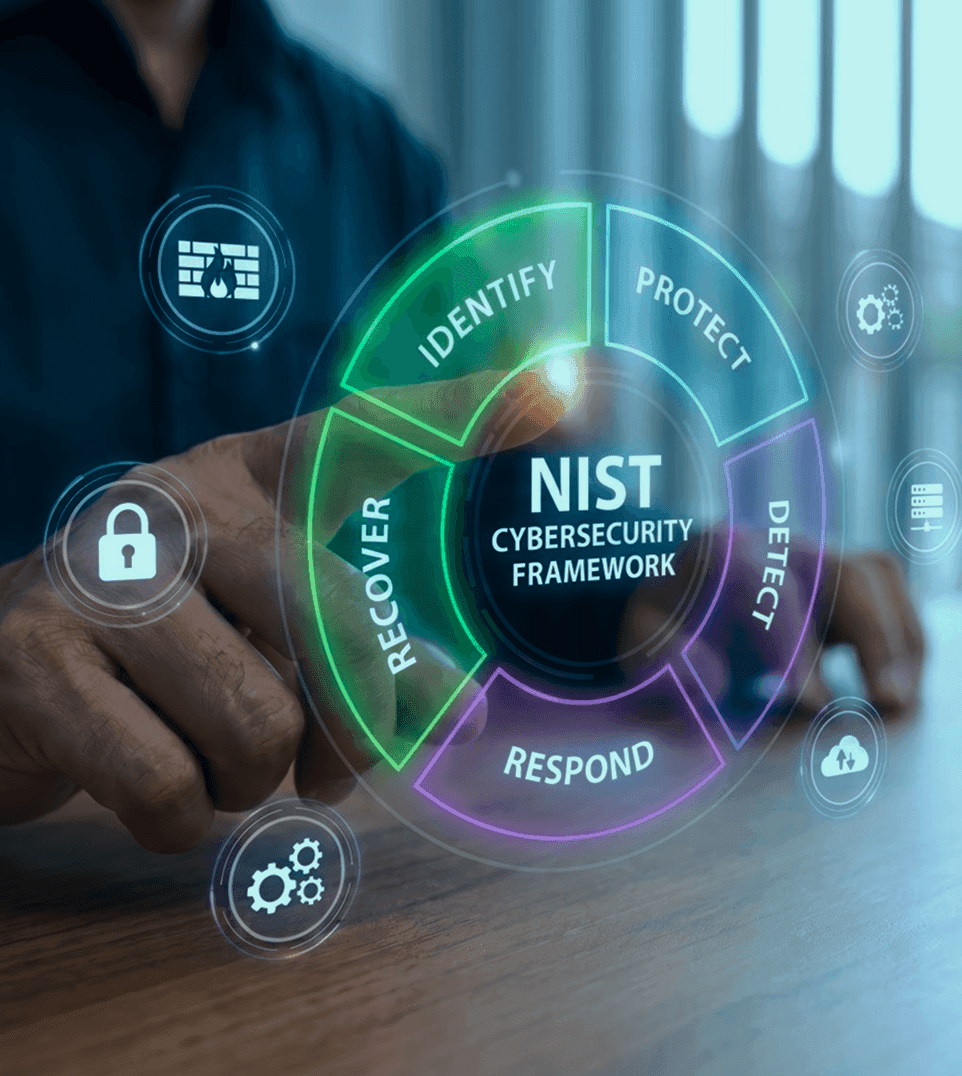
The National Institute of Standards and Technology (NIST) develops globally recognized cybersecurity frameworks and standards that help organizations identify, assess, manage and reduce cybersecurity risks.
NIST frameworks provide a structured, risk-based approach to cybersecurity governance and are widely adopted across government agencies, financial institutions, healthcare organizations, critical infrastructure providers, technology companies and enterprises worldwide.
Rakshaq helps organizations implement NIST frameworks tailored to their business objectives, regulatory requirements and risk profile.
Advantages
Benefits
The Value We Deliver
Why Choose Us
Rakshaq combines deep cybersecurity expertise with automation-driven DevSecOps practices to help organizations build secure, scalable and compliant applications. Our proactive approach integrates security across the entire software development lifecycle, enabling faster delivery while minimizing risks.
Why Choose Rakshaq for NIST Consulting?
Rakshaq combines deep cybersecurity expertise with practical implementation experience to help organizations successfully adopt NIST frameworks.
Tailored Implementation
Customized NIST implementation aligned with your industry, business objectives and regulatory obligations.
Framework Integration
Align NIST with existing standards such as ISO/IEC 27001, CIS Controls, SOC 2, PCI DSS and cloud security frameworks.
Certified Cybersecurity Consultants
Experienced professionals specializing in cybersecurity governance, risk management and compliance.
Risk-Based Approach
Prioritize security investments based on business risk and critical assets.
End-to-End Consulting
From assessment and planning to implementation, remediation and continuous improvement.
Services
Deliverables
Rakshaq delivers end-to-end Security Compliance Audit services covering governance, technology, operations and regulatory compliance.
Service Outputs
Phases
Assess the organization's existing cybersecurity posture against the applicable NIST framework (e.g., NIST Cybersecurity Framework (CSF) or NIST SP 800-53). Define the scope, identify critical assets and establish a roadmap for framework adoption.
Evaluate governance, policies, technical controls and operational processes against NIST requirements. Identify control gaps, assess risks and prioritize remediation activities based on business impact and organizational objectives.
Implement and strengthen cybersecurity controls, policies, procedures and risk management practices aligned with the NIST framework. Support security awareness, documentation and process improvements to enhance cybersecurity maturity.
Validate the effectiveness of implemented controls through assessments and periodic reviews. Deliver a comprehensive maturity assessment, executive dashboard and strategic recommendations to support continuous improvement and long-term alignment with NIST best practices.
Insights & Answers
FAQs
Implementing NIST guidelines enables organizations to establish a mature cybersecurity program based on internationally accepted best practices. It helps identify and manage cyber risks, improve security governance, strengthen incident response capabilities, protect sensitive data and enhance business resilience. Additionally, NIST provides a strong foundation for meeting regulatory requirements and aligning with other security frameworks such as ISO/IEC 27001, CIS Controls and industry-specific compliance obligations.