
Phishing Simulation As A Service
About The Service
Overview
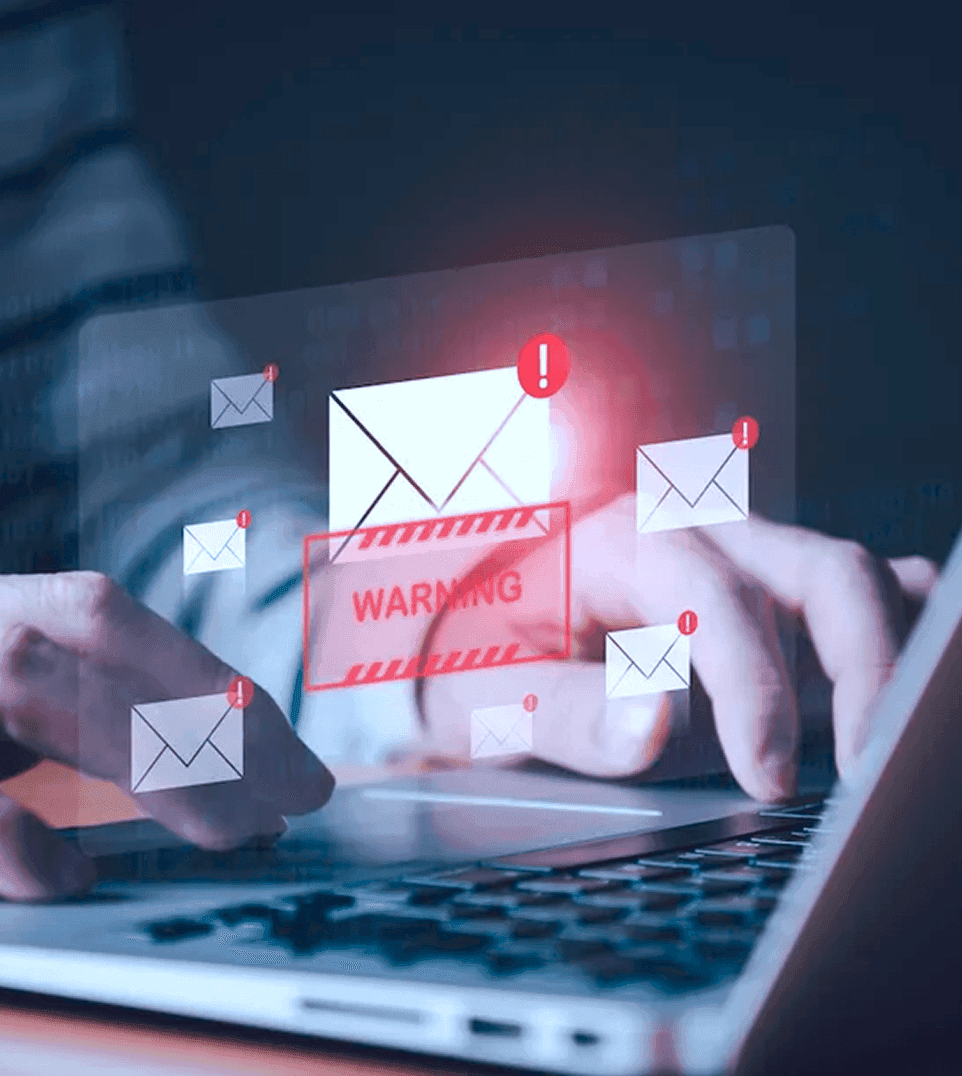
Human error remains one of the leading causes of successful cyberattacks. Despite significant investments in security technologies, attackers continue to exploit employees through carefully crafted phishing campaigns delivered via email, SMS (Smishing), WhatsApp, collaboration platforms, QR codes and social engineering techniques.
Modern phishing attacks no longer rely solely on fraudulent emails. Cybercriminals increasingly leverage SMS messages, WhatsApp conversations, malicious QR codes (Quishing) and AI-generated messages to trick users into disclosing credentials, installing malware, approving fraudulent transactions, or compromising sensitive information.
Rakshaq's Phishing Simulation & Human Risk Assessment service enables organizations to proactively measure and improve employee resilience against phishing and social engineering attacks through realistic, controlled attack simulations. Our campaigns replicate real-world adversary tactics using customized phishing scenarios tailored to your organization, industry and workforce.
Beyond measuring click rates, we evaluate user behavior across the complete phishing lifecycle-including email interaction, credential submission, attachment execution, QR code scanning, SMS responses, WhatsApp engagement and reporting behavior. Immediate awareness training, personalized learning modules and actionable remediation recommendations help transform employees into an effective first line of defense.
Our methodology aligns with NIST Cybersecurity Framework (CSF), ISO/IEC 27001, NIST SP 800-50, SANS Security Awareness Maturity Model, CIS Controls and industry-specific cybersecurity regulations.
Advantages
Benefits
The Value We Deliver
Why Choose Us
Rakshaq combines deep cybersecurity expertise with automation-driven DevSecOps practices to help organizations build secure, scalable and compliant applications. Our proactive approach integrates security across the entire software development lifecycle, enabling faster delivery while minimizing risks.
Realistic Multi-Channel Simulations
Rakshaq conducts advanced phishing exercises across Email, SMS, WhatsApp and QR Code scenarios using real-world attack techniques to evaluate user readiness.
Risk-Based Awareness & Analytics
Our assessments identify high-risk users, analyze behavioral patterns and provide insights to improve security awareness and reduce human risk.
AI-Driven & Customized Campaigns
We design industry-specific phishing scenarios using AI-enhanced approaches aligned with organizational risks, user behavior and security objectives.
Continuous Training & Improvement
We provide immediate micro-learning support, executive dashboards, maturity assessments and actionable recommendations to build a stronger security culture.
Services
Deliverables
The importance of security compliance audits lies in their ability to identify and mitigate cybersecurity risks, ensure regulatory adherence and enhance operational resilience. By conducting regular audits, organizations can safeguard sensitive data, build stakeholder trust and demonstrate commitment to cybersecurity excellence.
Service Outputs
Phases
We conduct realistic phishing simulations across multiple channels to evaluate employee awareness, identify human vulnerabilities and measure organizational exposure to social engineering attacks.
We analyze user responses, department-wise risk levels and behavioral patterns to identify high-risk users and assess the effectiveness of existing security awareness measures.
We provide detailed reports and dashboards highlighting campaign performance, risk exposure, awareness effectiveness and key findings for management review.
We deliver prioritized recommendations, training insights and improvement strategies to strengthen employee awareness and reduce future phishing risks.
Insights & Answers
FAQs
A Phishing Simulation is a controlled cybersecurity exercise that safely imitates real-world phishing attacks to evaluate how employees respond to malicious emails, SMS messages, WhatsApp messages, QR codes and other social engineering techniques. The objective is to measure human cyber resilience and improve security awareness.